
The Future of Social Media: What Comes Next?

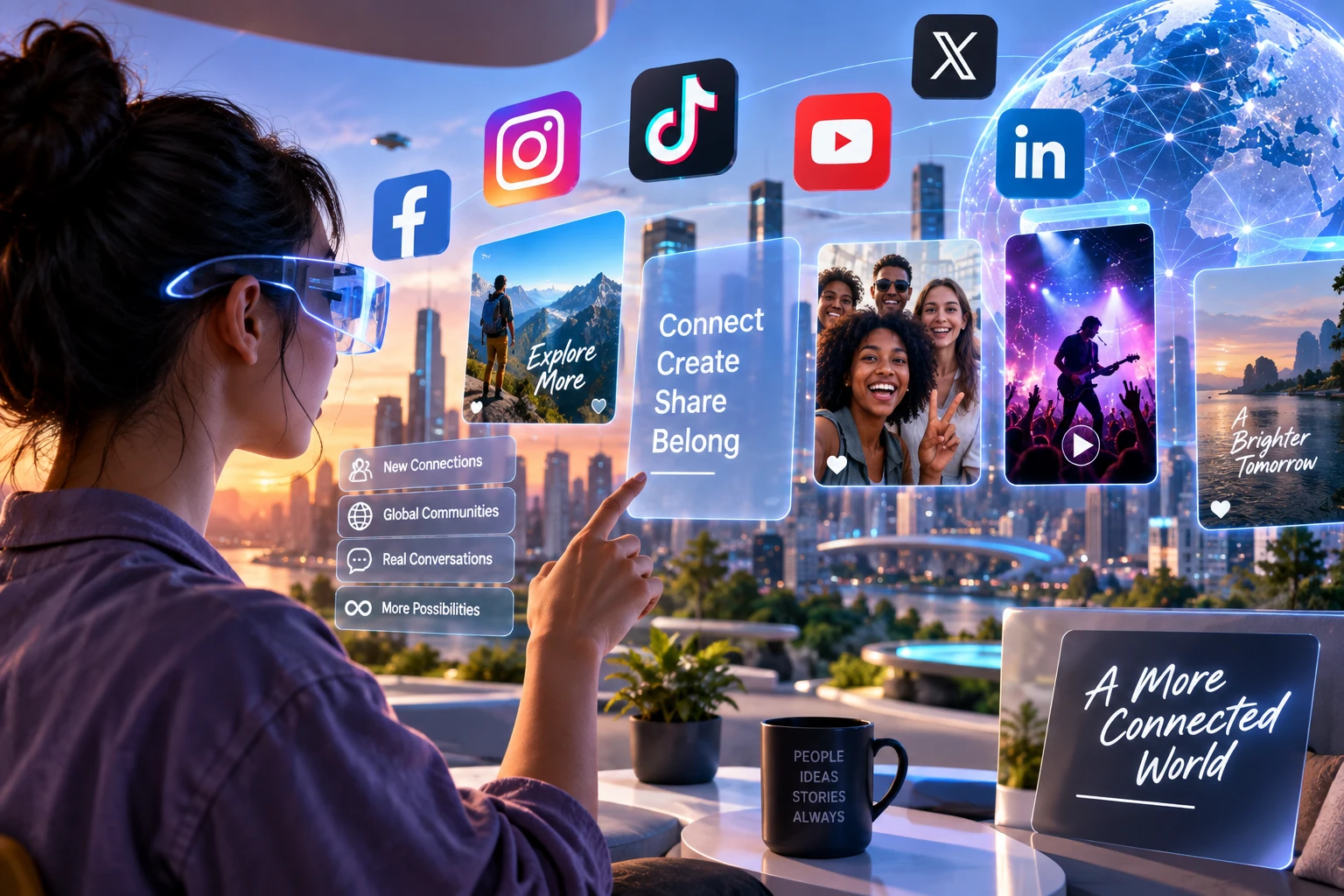
Social media has changed dramatically since the early days of online communities. Platforms have evolved from simple spaces for sharing messages and photographs into powerful ecosystems for entertainment, communication, business, news, education, and personal expression.
The next stage of social media is likely to be shaped by artificial intelligence, immersive technology, personalized experiences, changing privacy expectations, and new approaches to digital communities. While the exact future is impossible to predict, several trends are already offering clues about what comes next.
Artificial Intelligence Will Become More Visible
Artificial intelligence is likely to become deeply integrated into social media platforms. AI can already help recommend content, detect certain harmful material, generate images and text, translate languages, and improve search.
Future platforms may use AI to create more personalized feeds, assist creators with content production, and provide intelligent tools for editing and communication.
Users may also interact with AI-generated assistants or characters directly within social platforms. This could create new forms of entertainment and communication while raising important questions about transparency and authenticity.
More Personalized Feeds
Social media feeds are already personalized according to user behavior. Future systems may become even more sophisticated.
Instead of simply recommending posts based on likes and follows, algorithms could consider broader patterns such as viewing habits, interests, preferred formats, and changing topics.
Greater personalization may make platforms more relevant, but it could also create concerns about information bubbles. Users may need greater control over how recommendation systems influence what they see.
The Rise of Short-Form and Visual Content
Short videos have become an important part of online communication, and visual content is likely to remain influential.
However, future social media may go beyond traditional short-form video. Interactive video, augmented reality, livestreaming, virtual environments, and other formats could become more common.
Creators will have more ways to combine video, audio, graphics, text, and interactive elements in a single experience.
Augmented and Virtual Reality
Augmented reality could bring digital content into physical surroundings. Users may eventually interact with social content through glasses or other wearable devices rather than relying entirely on smartphone screens.
Virtual reality could create digital spaces where people meet, attend events, play games, work, or socialize.
These technologies could make social media feel less like scrolling through a feed and more like entering an interactive environment.
Social Commerce Will Expand
Social media is increasingly connected with shopping. Users can discover products through creators, advertisements, videos, livestreams, and recommendations.
Future platforms may make purchasing even more integrated into the social experience. A user might discover a product in a video, ask questions through an interactive feature, and complete the purchase without leaving the platform.
This could provide businesses with new ways to reach customers while giving consumers more convenient shopping experiences.
Creators Will Remain Important
Creators have become central to social media. Individuals can build audiences around entertainment, education, expertise, hobbies, lifestyles, and communities.
The creator economy is likely to continue developing, with new tools for monetization, subscriptions, digital products, live events, and direct audience relationships.
Artificial intelligence may help creators produce content more efficiently, but audiences are likely to continue valuing authenticity and personal connection.
Greater Focus on Privacy
As platforms collect more information to personalize experiences, privacy will remain a major concern.
Users are becoming increasingly aware of how their data is collected and used. Future social networks may face stronger expectations for transparency, security, and user control.
People may also demand easier ways to manage what information is shared, how recommendations work, and whether their content is used to train automated systems.
Changes in Online Communities
Social media may gradually move toward smaller, more focused communities rather than relying entirely on massive public feeds.
People often seek spaces where they can interact with others who share specific interests. Private groups, niche communities, professional networks, and membership-based platforms could become increasingly valuable.
This could create deeper relationships and more meaningful conversations than broad, constantly changing feeds.
The Challenge of Misinformation
As AI makes content creation easier, distinguishing authentic material from manipulated or generated content may become more difficult.
Social platforms will need stronger approaches to content authenticity, labeling, moderation, and media literacy. Users will also need to become better at evaluating information before sharing it.
The ability to identify trustworthy sources may become one of the most important digital skills.
Social Media and Business
Businesses will continue using social media for marketing, customer service, brand building, recruitment, and sales.
However, simply posting promotional content may become less effective. Companies will likely need to create useful, entertaining, educational, and authentic content that encourages genuine interaction.
AI-powered analytics may help businesses understand audiences, but human creativity and understanding will remain important for building strong communities.
What Will Social Media Look Like?
The future of social media may be less about individual platforms and more about connected digital experiences. Communication, entertainment, shopping, gaming, work, and education could increasingly overlap.
Users may move between different forms of digital interaction without thinking about which category they belong to.
The smartphone will likely remain important, but wearable technology, voice interfaces, augmented reality, and other devices could provide new ways to participate.
Conclusion
The future of social media will likely be more personalized, interactive, immersive, and AI-powered. Creators will continue shaping online culture, businesses will find new ways to communicate with customers, and users will have more options for connecting with communities.
At the same time, privacy, misinformation, digital wellbeing, and content authenticity will become increasingly important.