
What Will the Future of Entertainment Look Like?

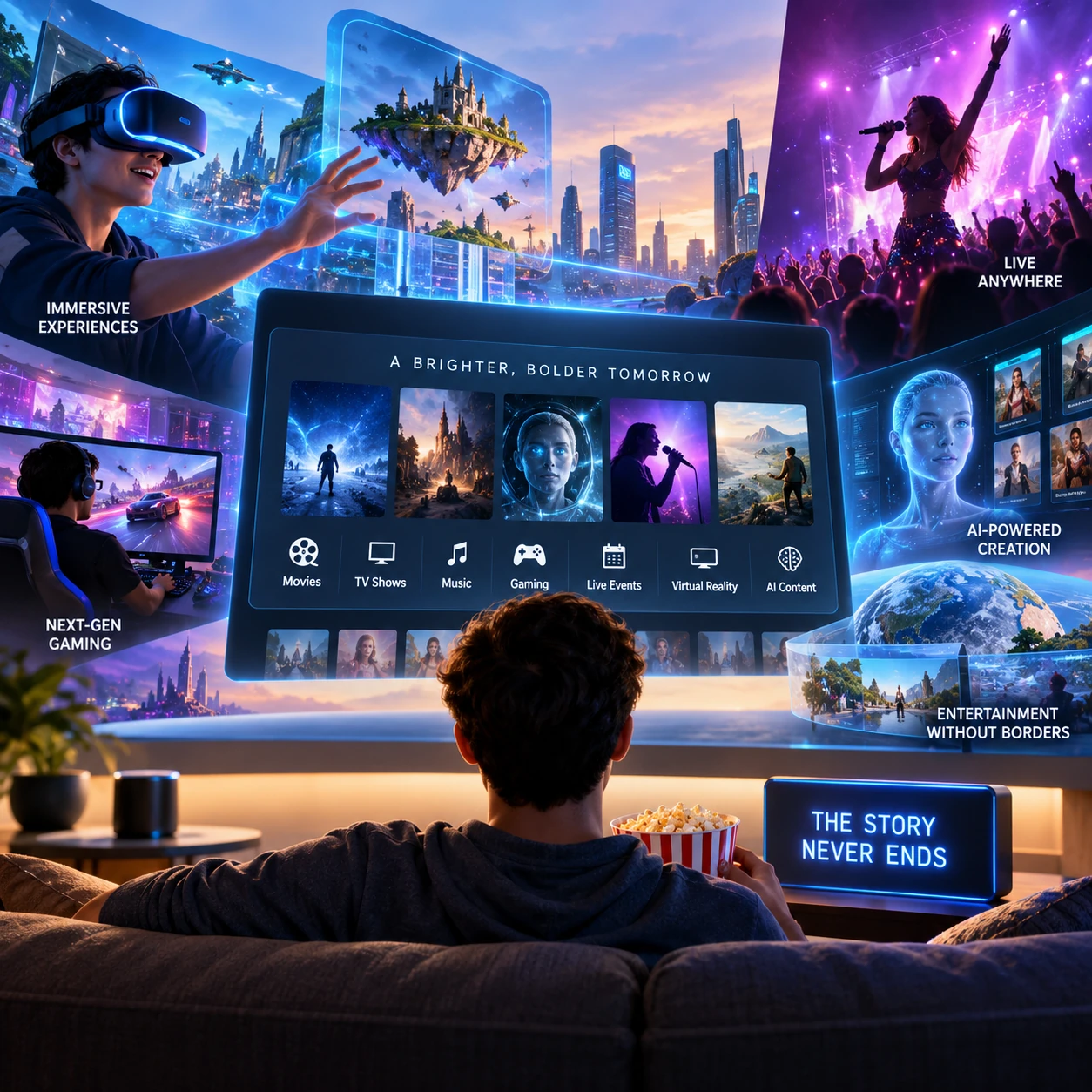
Entertainment has always evolved alongside technology. From radio and television to streaming platforms, smartphones, virtual reality, and artificial intelligence, each technological shift has changed how people create, discover, and enjoy content. The future of entertainment is likely to continue this pattern, with more personalized experiences, interactive formats, immersive technologies, and new ways for creators to connect with audiences.
More Personalized Entertainment
One of the biggest changes will likely be greater personalization. Digital platforms already recommend movies, shows, songs, games, and other content based on users’ interests and previous activity.
Future recommendation systems may become more sophisticated by understanding not only what people watch or listen to, but also when they prefer certain types of entertainment and how their interests change.
Instead of browsing through thousands of options, audiences may increasingly receive entertainment experiences tailored to their individual preferences.
Artificial Intelligence in Creative Work
Artificial intelligence is expected to play a growing role in entertainment production. AI tools can already assist with editing, visual effects, sound production, animation, content organization, and creative brainstorming.
In the future, creators may use AI to experiment with characters, environments, music, dialogue, and visual concepts more quickly. Smaller creative teams could gain access to production capabilities that once required large budgets and specialized resources.
However, human creativity will remain important. Storytelling depends on emotion, experience, cultural understanding, and artistic judgment. AI may become a powerful creative assistant rather than a complete replacement for human creators.
Immersive Experiences
Virtual reality, augmented reality, and other immersive technologies could change the relationship between audiences and entertainment.
Instead of simply watching a movie on a screen, viewers may eventually be able to experience stories from within interactive environments. Imagine exploring a fictional world, choosing where to look, interacting with characters, or influencing certain elements of a story.
Immersive entertainment could become particularly influential in gaming, live events, education, tourism, and interactive storytelling.
Interactive Movies and Shows
Traditional entertainment usually follows a fixed storyline, but technology makes interactive formats increasingly possible.
Future movies and series could allow viewers to make decisions that influence characters or story outcomes. Different choices might lead to different scenes, endings, or experiences.
This approach could blur the boundary between movies, games, and interactive storytelling. Audiences would become active participants rather than simply watching from beginning to end.
The Growth of Creator-Led Entertainment
Digital platforms have already made it easier for individuals to become entertainers, educators, musicians, commentators, and content creators.
This trend is likely to continue. Creators can build audiences directly through social platforms, video services, podcasts, newsletters, livestreams, and other digital channels.
Future entertainment may therefore become even less dependent on traditional studios and media organizations. A creator with a strong idea and a dedicated audience may be able to produce and distribute content globally.
Changes in Streaming
Streaming has transformed how audiences access entertainment, but the model itself may continue evolving.
Consumers may increasingly expect flexible access across multiple devices and platforms. Entertainment companies may experiment with different subscription models, advertising-supported services, bundled offerings, and specialized content packages.
Competition for audience attention will remain intense, making original storytelling and strong user experiences increasingly important.
The Evolution of Live Entertainment
Digital technology does not necessarily mean the end of physical entertainment. Concerts, theaters, sports events, festivals, and other live experiences can offer social and emotional experiences that digital platforms cannot completely reproduce.
Instead, technology may enhance live entertainment. Audiences could receive interactive features, augmented-reality elements, personalized information, digital merchandise, or hybrid experiences that combine physical and online participation.
New Forms of Music and Gaming
Music and gaming are likely to become increasingly interactive. Musicians can use digital tools to experiment with production, while audiences may engage with artists through virtual performances and interactive experiences.
Gaming could become even more social and immersive. Artificial intelligence may help create responsive characters and environments that adapt to individual players.
The distinction between entertainment categories may also become less clear. A game may function like a movie, a concert may include interactive digital environments, and a social platform may become a place for watching, creating, and participating in entertainment simultaneously.
Challenges for the Future
Technological progress will also create challenges. Questions surrounding copyright, privacy, digital ownership, artificial intelligence, performer rights, misinformation, and content authenticity will become increasingly important.
There may also be concerns about excessive screen time and the impact of highly personalized entertainment on attention and wellbeing.
Entertainment companies and technology developers will need to balance innovation with responsible practices.
What Audiences Can Expect
The future of entertainment will likely offer more choice, personalization, and participation. Audiences may have greater control over what they watch, how they experience stories, and how they interact with creators.
At the same time, the abundance of content may make discovery more difficult. Audiences may increasingly rely on recommendation systems, trusted creators, communities, and personalized platforms to find worthwhile experiences.
Conclusion
The future of entertainment is likely to be more interactive, immersive, personalized, and technologically advanced. Artificial intelligence, virtual reality, streaming, gaming, social platforms, and creator-driven content will continue influencing how stories and experiences are produced and consumed.
Yet technology will only be part of the equation. People will continue looking for humor, emotion, connection, creativity, and meaningful stories. The most successful entertainment of the future will likely combine powerful technology with the timeless human desire to be surprised, inspired, and connected.